Feeding birds on a NYC balcony or backyard
Choose bird feeders for your NYC balcony or backyard, check building rules, prevent window collisions, manage spills, and know when to stop feeding.
In short
- Start feeding only where you have permission, cleaning access, spill control, and a plan for nearby glass.
- Audubon recommends placing feeders less than 3 feet from windows or more than 30 feet away.
- Cornell Lab recommends cleaning seed feeders about every 2 weeks, more often during wet weather or heavy use.
- Audubon finds black-oil sunflower seed appeals to the greatest number of birds, so start with it.
Start with bird feeders only if your space allows safe mounting, regular cleaning, contained spills, and protection from nearby glass. Check your building's rules before buying anything. If you cannot meet those conditions, watch visiting birds without offering food.
Is feeding appropriate for your space?
Ask your landlord, managing agent, or board about feeders, attachments, and balcony use. Permission does not replace sanitation responsibilities. NYC Health Code prohibits conditions that sustain pests. NYC311 also takes complaints when feeding pigeons creates unsanitary conditions.
Review these conditions before installing any hardware.
| Readiness check | Balcony | Yard |
|---|---|---|
| Permission | Confirm building rules and permitted mounting methods. | Confirm property permission and applicable local rules. |
| Cleaning access | Reach every part without leaning over a railing; contain dirty wash water. | Choose a location you can reach throughout the feeding season. |
| Spill management | Keep seed and waste off neighboring ledges and patios. | Remove fallen seed, hulls, and accumulated waste. |
| Collision prevention | Assess nearby windows, including neighboring glass. | Assess windows around the entire feeding area. |
| Official advisories | Check USFWS and NYS DEC wildlife-health notices before starting or restarting. | Check USFWS and NYS DEC wildlife-health notices before starting or restarting. |
Check official wildlife-health advisories before you buy supplies, because local rules and conditions can change quickly.
Choose food and feeders together
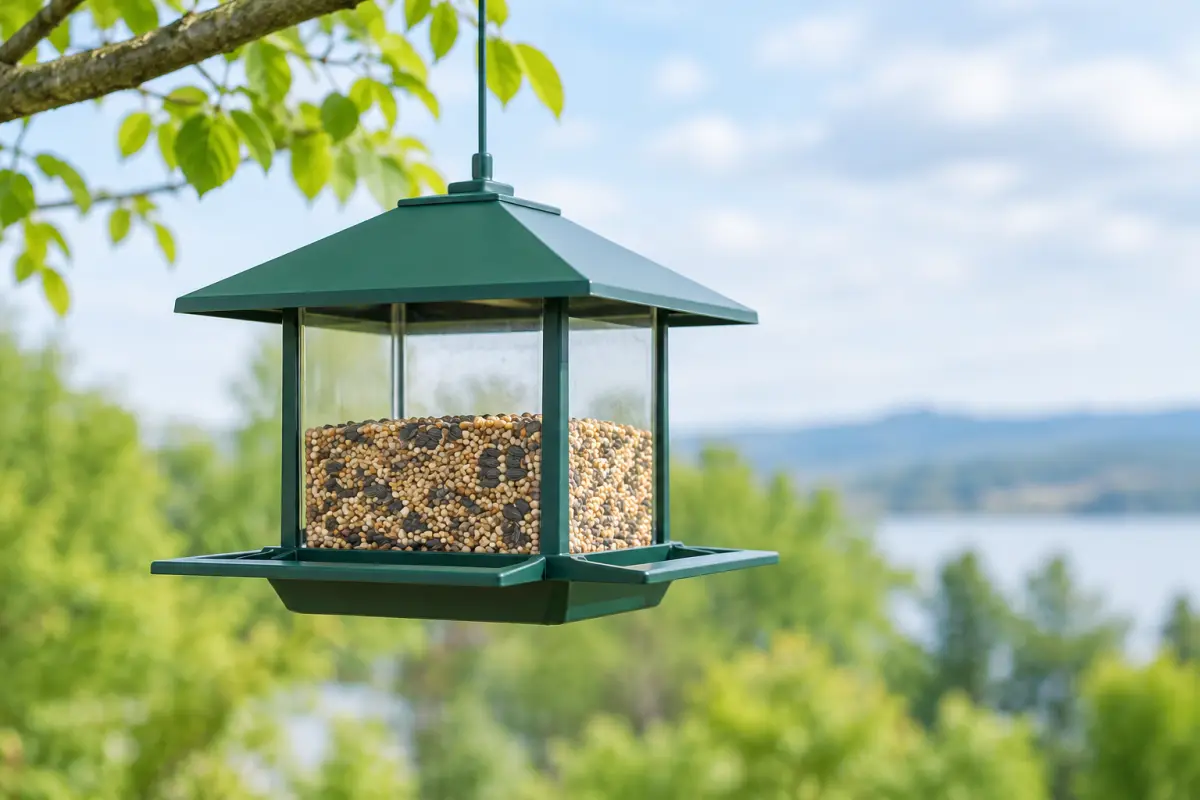
Use the feeder and seed matcher tool to compare foods, feeder types, and reported visitor months. Start with one manageable feeder instead of setting up several stations at once.
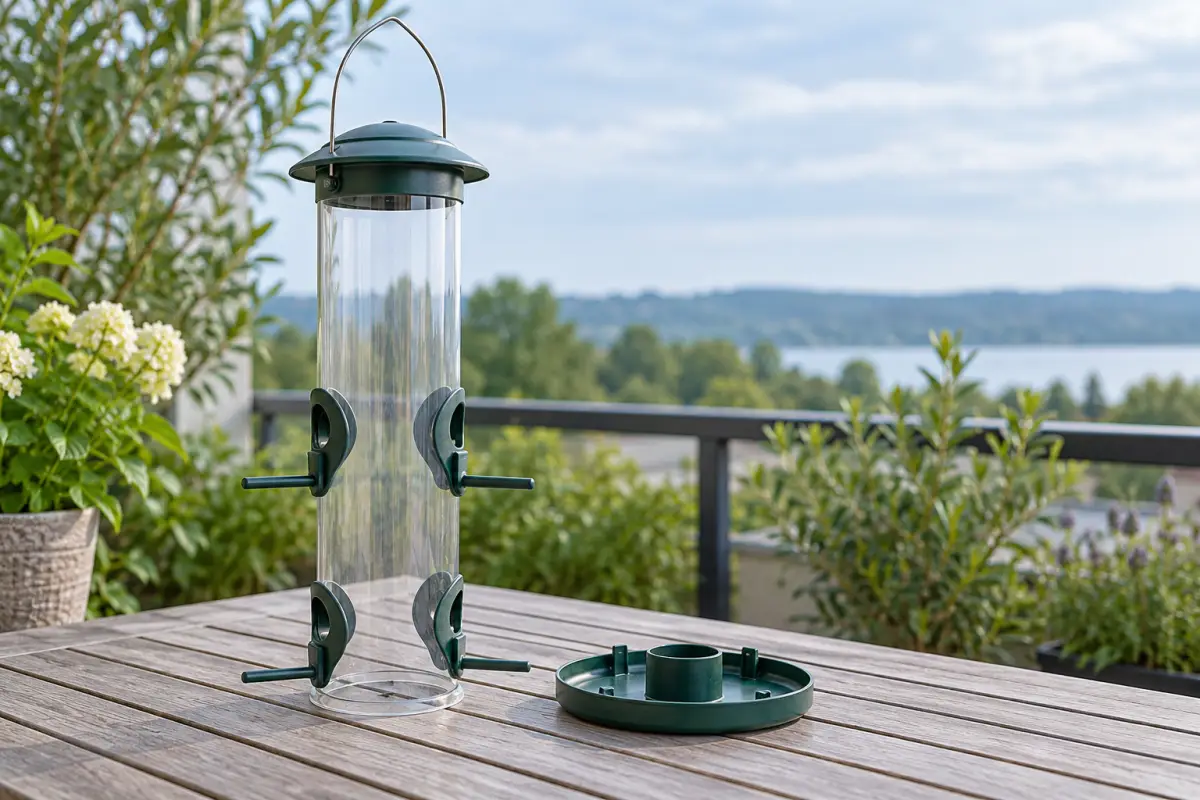
Audubon identifies black-oil sunflower as a broadly appealing seed. Choose wild bird feeders that open fully for cleaning. For hanging bird feeders, prioritize safe access over an unreachable position.
No-mess seed reduces shell waste, but you must still sweep up uneaten seed and droppings. Avoid bread and table scraps.
Winter bird feeders do not guarantee winter visitors. Northern Cardinal is common in NYC reports throughout the year, according to the 2021 to 2025 eBird Observation Dataset index. This index reflects typical citywide reporting, so individual balcony visits will vary. Explore NYC birds by month for seasonal context.
Reduce collisions and disease
Place feeders less than 3 feet from glass or more than 30 feet away, following Audubon's guidance. Window bird feeders still require attention to surrounding glass, because distance alone does not eliminate collision risk.
Apply exterior window markers across hazardous panes. American Bird Conservancy recommends spacing markers no farther apart than 2 inches by 2 inches. A few isolated decals leave large untreated gaps.
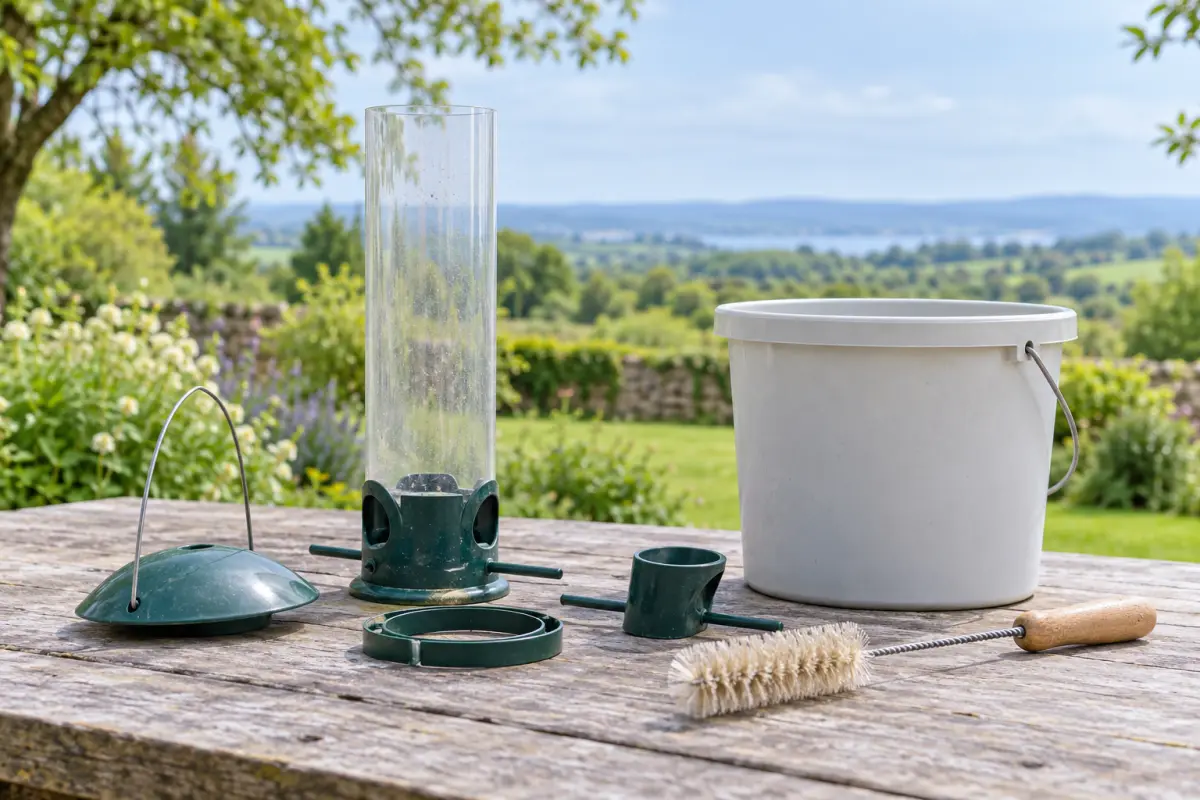
Clean seed feeders about every 2 weeks, following Cornell Lab guidance. Clean more often during heavy use or wet weather, and remove spoiled food promptly.
Scrub away debris before disinfecting. Audubon's guide describes a soak in a 10 percent non-chlorine bleach solution. Cornell cites research supporting a 10-minute soak in dilute bleach, no more than 1 part bleach to 9 parts water. Follow product safety directions, rinse thoroughly, and dry completely before refilling. Never mix cleaning chemicals.
Use the separate hummingbird feeder guide for nectar preparation and its more frequent cleaning schedule.
Pause or remove an unsafe setup
Stop feeding when spills, pests, fouling, collisions, or missed cleaning make the setup unsafe. Correct the cause before restarting.
Pause if birds appear ill. NYS DEC describes swollen, reddened eyelids and discharge as signs of House Finch conjunctivitis. Never attempt home treatment; contact a licensed wildlife rehabilitator for guidance.
Follow official suspension notices. USFWS notes that feeders concentrate songbirds and can increase disease transmission, even when avian influenza risk is comparatively low.
If feeding is unsuitable, use transit-accessible NYC birding places to keep watching without maintaining a feeding station.
If you buy through a partner link, we may earn a commission at no extra cost to you. Partners do not see or approve our pages. How we handle advertising.
Questions we get
Can I feed birds in an NYC park instead?
NYC Parks asks visitors not to feed park wildlife such as pigeons, squirrels and ducks. Keep your feeding setup on permitted private property, and do not move unwanted seed into a park.
Should I add a hummingbird feeder?
Add one only if you can maintain a separate cleaning routine. Audubon specifies one part white sugar to four parts water, without red dye. Audubon's guide says to wash nectar feeders every few days with very hot water; its hummingbird FAQ says daily or every other day in hot weather.
Does avian influenza mean every feeder must come down?
Not automatically. The U.S. Fish & Wildlife Service says typical feeder visitors are not commonly infected, making feeders unlikely to increase avian influenza spread. That does not remove other disease risks. Follow current official instructions for your location.
All guides on this topic
 At HomeHow to clean a bird feeder, and how often
 At HomeTypes of bird feeders and the birds they attract
- At HomeHummingbird feeders: nectar, placement and cleaning in NYC
 At HomeHow to keep squirrels out of bird feeders
- At HomeHow to stop birds from hitting your windows
 ToolWhich feeder and food for the birds you want
How we know
- allaboutbirds.org
- abcbirds.org
- nyc.gov
- Audubon Guide to Bird Feeding (PDF) (media.audubon.org)
- Hummingbird Feeding FAQs | Audubon (audubon.org)
- Wildlife in New York City | NYC Parks (nycgovparks.org)
- Pigeon Droppings or Odor · NYC311 (portal.311.nyc.gov)
- fws.gov
- ny.gov (dec.ny.gov)
Seasonal patterns are guides, not promises of a sighting. Check current access rules and conditions before heading out. Give birds space, stay on open paths and avoid disturbing nests or roosts.