Which feeder and food for the birds you want
Match cardinals, finches, and other visitors with suitable feeders and foods, then check window safety, cleaning, balcony space, and squirrel access.
In short
- Match the birds you want with suitable foods and feeder types, without a promise that they will visit.
- Place feeders less than 3 feet from windows or more than 30 feet away, following Audubon guidance.
- Check balcony permissions, access for cleaning, and seed spill before installing a feeder.
- Clean seed feeders about every two weeks, and more often in wet weather or heavy use, following Cornell Lab guidance.
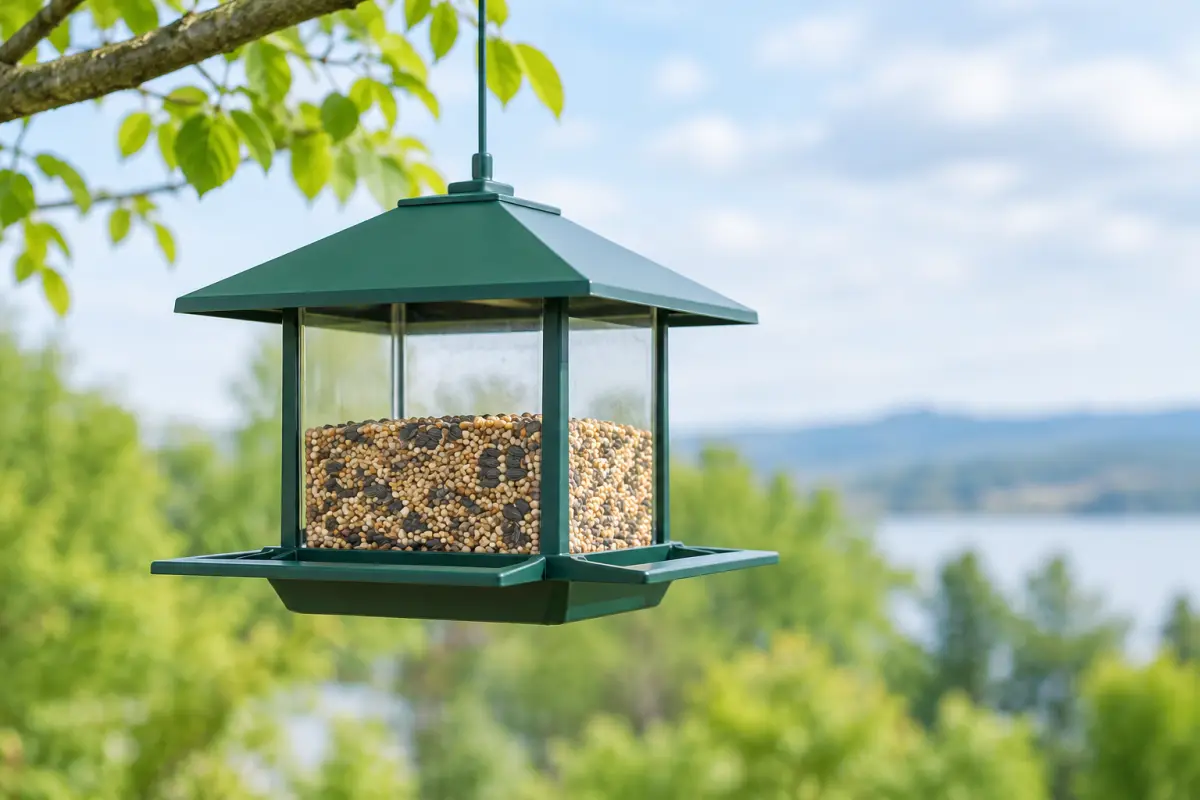
What it asks
Choose bird feeders for cardinals with comfortable feeding space, then match the food to your intended visitors. Check glass, cleaning access, and seed spill before installing anything. A suitable combination of food and feeder cannot guarantee visits.
The feeder and seed matcher works from your chosen birds or a feeder type. From birds, it ranks foods by how many selected species eat them. It also identifies feeder types that hold those foods and shows when each bird is reported in New York City.
Starting from a feeder type shows suitable foods and the city birds that take them. You still need a site check for balcony dimensions, squirrels, and cleaning access, because the tool does not measure your yard.
What it is based on
Audubon feeding guidance supplies the food, feeder, and placement recommendations. Cornell's Project FeederWatch and All About Birds explain drainage, perch size, wet seed, and cleaning routines.
Compare feeding space as carefully as feeder labels. Project FeederWatch notes that tube feeders with short perches suit small birds such as finches but exclude larger birds such as grackles and jays. Look for drainage holes in platforms and pick hardware you can take apart quickly. You can compare feeder builds in types of bird feeders.
Seasonal records come from the Cornell Lab eBird Observation Dataset from 2021 to 2025, published through GBIF under CC BY 4.0. Our index compares species reports with the month's most-reported species, taking the median across those five years.
These figures describe historical reporting patterns. They do not represent recent observations, live sightings, or forecasts. The seasonal data and Audubon guidance were verified on October 23, 2026.
What it simplifies
Food rankings count matches among your selected birds. They do not measure nutritional completeness, predict visits, or score commercial brands. The matcher uses published recommendations without hands-on equipment testing.
Feeders within a single category are rarely identical. Port size, perch arrangement, and seed flow matter just as much as the broad design. Offering a seed mix that suits your target species can also draw uninvited birds.
Balconies need extra planning. Check building rules first, and pick a spot where you can reach the feeder safely to refill and scrub it. Hulled seed still leaves uneaten scraps and droppings, so sunflower chips are never maintenance-free.
Squirrels also limit where you can hang a feeder. Audubon recommends placing pole-mounted feeders at least 10 feet away from the nearest shrub, tree, or other tall structure. If your space is too tight for that clearance, read our squirrel-management guide before buying gear.
How to read the result
Treat each match as a guide for planning. Review the food, feeder build, and your site together before buying equipment. Our checklist combines Audubon guidance checked on October 23, 2026, with advice from Cornell and NYC Parks.
Check window safety first. Audubon advises placing feeders within 3 feet of glass or farther than 30 feet away. Cornell's All About Birds explains that a bird taking off from a feeder close to the glass will not be at top speed if it hits. If you cannot place the feeder safely or treat reflective windows, do not install a feeder yet.
Plan a regular cleaning schedule. Cornell recommends scrubbing seed feeders every two weeks, and more often in wet weather. If you cannot maintain that cleaning routine, hold off on buying a feeder.
Manage fallen seed to prevent pest problems. NYC Parks warns that leftover feed can attract rodents. Avoid installing a feeder over surfaces where you cannot sweep up hulls and discarded seed regularly.
Watch your visitors closely for signs of illness. If you notice sick birds, Cornell recommends taking feeders down and cleaning them. If more than one bird gets sick, it suggests closing the feeding station for a couple of weeks so the flock disperses.
For specific small-space layouts, consult our balcony and backyard guide.
Then check your proposed location
Measure the distance to nearby glass and work through the safety checklist before buying equipment.
Then compare feeder construction
Choose accessible feeding space, drainage, and parts you can remove for thorough cleaning.
Then start with a small supply
Offer manageable amounts and inspect food for dampness instead of keeping a large reservoir full.
Then watch for problems
Pause feeding if sick birds, persistent waste, or rodent activity make the station unsafe.
If you buy through a partner link, we may earn a commission at no extra cost to you. Partners do not see or approve our pages. How we handle advertising.
Questions we get
Does safflower make a feeder squirrel-proof?
No. Cornell notes that safflower has limited appeal to squirrels, but it is not a guaranteed barrier. Use placement and feeder design alongside food choice.
Can a thistle sock stay outside in rain?
Cornell warns that mesh feeders can become soaked. Offer small amounts, replace wet seed, and let the feeder dry before refilling.
What should I do if a bird hits the window?
Contact a licensed wildlife rehabilitator for advice, even if the bird appears stunned rather than visibly injured. Do not try to feed it. Address the glass hazard before restarting feeding.
Keep reading
How we know
- allaboutbirds.org
- feederwatch.org (cdn.feederwatch.org)
- allaboutbirds.org
- allaboutbirds.org
- nycgovparks.org
- allaboutbirds.org
- Audubon Guide to Bird Feeding (PDF) (media.audubon.org)
- allaboutbirds.org
- allaboutbirds.org
Seasonal patterns are guides, not promises of a sighting. Check current access rules and conditions before heading out. Give birds space, stay on open paths and avoid disturbing nests or roosts.