How to clean a bird feeder, and how often
Clean seed feeders every two weeks, rinse and dry completely, and clean sooner after wet weather. Learn safe bleach steps and when to stop feeding.
In short
- Clean seed feeders about every two weeks, and more often during wet weather or heavy use.
- The CDC bleach procedure uses 1 part bleach to 9 parts water, with a soak of at least 10 minutes.
- Never clean feeders in a kitchen or anywhere you prepare or store food.
- If you find a sick or dead bird in your yard, CDC guidance calls for removing feeders and bird baths for two weeks.
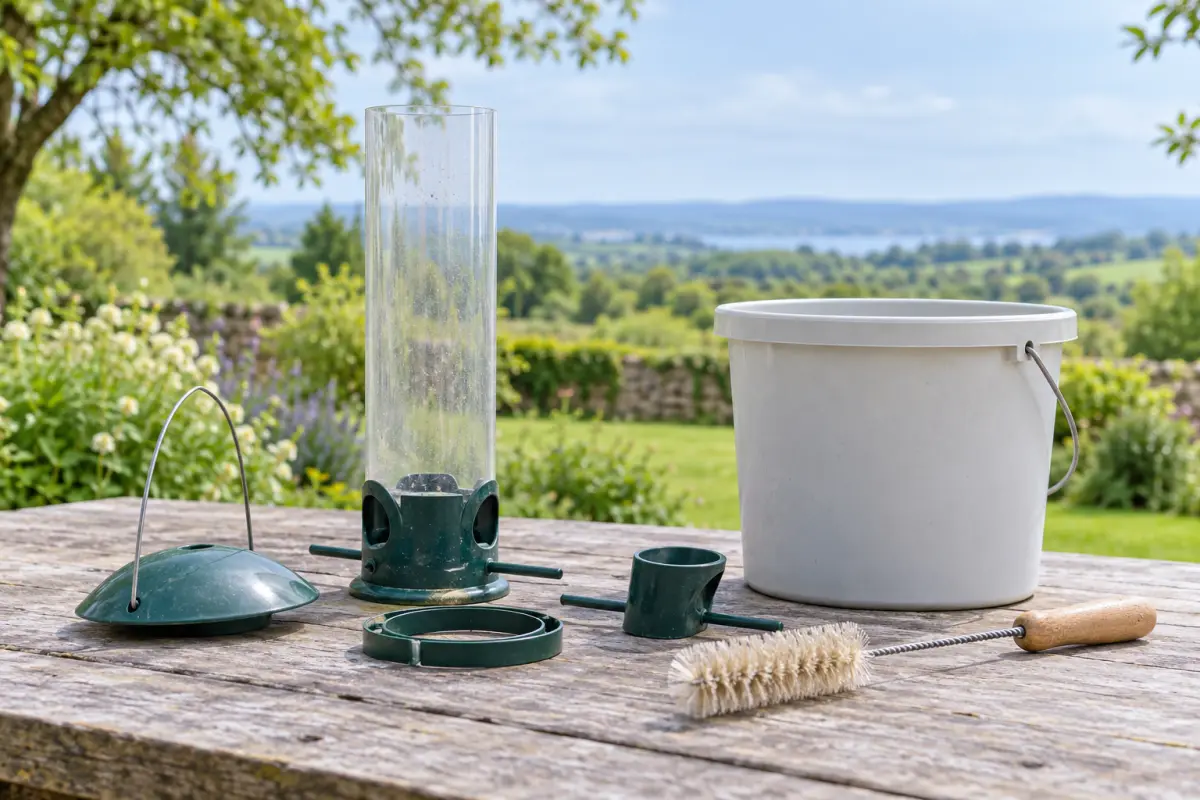
Learn how to clean bird feeders by emptying them, scrubbing away debris, disinfecting, rinsing thoroughly and drying completely before refilling. Start with a two-week cleaning schedule for seed feeders, shortening it during wet weather or heavy use. If you find a sick or dead bird, take down feeders and bird baths immediately. Do not simply wash and rehang them.
How to clean, rinse and dry your feeder
Follow the CDC procedure for a dependable seed-feeder routine. Active outbreak orders from wildlife agencies can supersede these regular maintenance steps.
Wear disposable gloves and work outside whenever possible. Never wash feeders in your kitchen or anywhere you prepare or store food. Keep pets away from feeders, bird baths and the ground underneath.
Empty old seed and dismantle removable parts. Scrub every surface with warm, soapy water until droppings and caked grime disappear. Rinse away the soapy residue with fresh water before disinfecting.
Mix 1 part bleach with 9 parts water in a bucket. Audubon's feeding guide describes a similar soak in a 10 percent non-chlorine bleach solution, followed by a good rinse and drying in the sun.
Never mix bleach with other cleaning products. Soak the parts for at least 10 minutes, rinse thoroughly, and let everything air-dry before refilling.
Source-specific seed-feeder procedures
Keep recommended dilution ratios and contact times together. Never shorten the soak time or substitute a quick spray.
| Guidance | Cleaning and dilution | Contact time | Rinse and dry | Routine interval |
|---|---|---|---|---|
| CDC: chosen routine here | Scrub with warm, soapy water; soak in 9 parts water and 1 part bleach. | At least 10 minutes. | Rinse thoroughly with clean water; air-dry completely before refilling. | At least monthly. |
| Cornell Lab of Ornithology: seed feeders | Take apart and remove debris; bleach solution of no more than 1 part bleach to 9 parts water. | Cornell cites research supporting a 10-minute soak. | Rinse thoroughly; dry completely before refilling. | About every two weeks; more often during heavy use or wet weather. |
| National Audubon Society: feeding guide | Soak in a 10 percent non-chlorine bleach solution. | Not stated. | Rinse well; dry in the sun. | Not stated. |
A two-week schedule follows Cornell's baseline, while the cleaning steps use CDC disinfection guidance. Regular cleaning lowers disease transmission, though it cannot eliminate every health risk.
How often to clean in changing weather
Clean seed feeders every two weeks under normal conditions. Cornell recommends washing them more frequently during wet weather or periods of heavy flock use. A US Fish and Wildlife Service article repeats Cornell's advice to clean at least once every two weeks.
Inspect seed ports and trays between scheduled wash days. Remove wet, moldy or clumped seed promptly instead of waiting for the calendar date. Rake up discarded hulls and droppings from the ground under your feeders.
Clean nectar feeders on a separate, faster schedule. The Audubon Guide to Bird Feeding recommends washing sugar-water feeders every few days with very hot water. Audubon's hummingbird FAQ says to empty and clean them every day or every other day in hot weather.
See our hummingbird feeder guide for nectar care instructions.
Trouble spots and a worked example
Check tube feeders below the lowest feeding port. Damp seed and hulls often collect in the bottom seam, so remove the base when the design allows. Scrub feeding ports, perches and plastic seams along with the main tube.
Clear platform feeders of droppings and damp seed between complete cleanings. Scrub the mesh tray and ensure all drainage holes stay open. USFWS notes that sweeping up old, moldy seed under feeders also helps reduce disease risk.
Consider a tube feeder on a Queens balcony visited by a House Finch after steady rain. You can look up seed recommendations in the feeder and seed matcher. Use the cleaning log at the end of this page (not the interactive tool) to track maintenance dates and seed condition.
Discard wet seed immediately. Scrub the feeder, let it dry completely, and refill with fresh sunflower seed. Inspect the feeder again within a week if wet weather continues. See our balcony and backyard guide for broader setup advice.
What to do if birds appear sick
Take down all feeders and bird baths if you see a sick or dead bird in your yard. CDC guidance calls for removing them for two weeks and cleaning them outdoors.
Watch birds from a distance and write down what you observe. Fluffed feathers, lethargy, poor flight or swollen eyes warrant concern, but they do not prove a specific illness.
Report unusual illness or multiple bird deaths to NYS DEC. CDC also lists USDA's toll-free number for reporting sick birds or unusual bird deaths: 1-866-536-7593. Contact a licensed wildlife rehabilitator for advice on an injured bird, and never attempt care at home.
Keep pets away from sick birds and avoid bare-handed contact with carcasses. Consult a doctor if you develop symptoms after handling bird feeders, and mention your exposure. Call 911 for human medical emergencies.
Where to check official feeding advisories
Check NYS DEC wildlife-health notices before putting feeders back up after a shutdown. Consult CDC guidance for human health precautions when handling backyard feeders.
Past outbreak reports do not indicate active feeding bans. Focus on current agency notices rather than older alerts from previous seasons.
Follow any local directive requiring a shutdown longer than two weeks. An active outbreak in your county overrides standard clearance timelines.
Printable cleaning and health log
Print this section and keep it with your cleaning bucket. Record field observations like 'swollen eye' rather than guessing a medical diagnosis.
Feeder ID/location: ____________________
Type: ____________________
Procedure/source used: ____________________
| Date | Scrubbed | Dilution and soak time | Rinsed | Fully dry | Weather/use notes | Next due |
|---|---|---|---|---|---|---|
| ______ | ☐ | __________________ | ☐ | ☐ | __________________ | ______ |
| ______ | ☐ | __________________ | ☐ | ☐ | __________________ | ______ |
| ______ | ☐ | __________________ | ☐ | ☐ | __________________ | ______ |
| ______ | ☐ | __________________ | ☐ | ☐ | __________________ | ______ |
- Remove fallen seed, hulls and waste beneath the feeder.
- Inspect the base, ports, seams and drainage openings.
- Wash hands after handling the feeder.
- Record any sick or dead bird observation: ____________________
- Record removal date and official advice before restarting: ____________________
Prepare a safe cleaning area
Wear disposable gloves. Use an outdoor bucket, away from food preparation and storage. Keep pets away.
Empty, dismantle and scrub
Discard leftover seed, take the feeder apart, and scrub away seed, droppings and grime with warm, soapy water. Rinse before disinfecting.
Follow the CDC bleach procedure
Soak the cleaned parts in 9 parts water and 1 part bleach for at least 10 minutes. Never mix bleach with other cleaning products.
Rinse and dry completely
Rinse thoroughly with clean water and let every part air-dry completely before reassembly and refilling.
Clean the feeding area and record the date
Sweep up fallen seed and hulls. Wash your hands with soap and water, then complete the cleaning log and set the next cleaning date.
If you buy through a partner link, we may earn a commission at no extra cost to you. Partners do not see or approve our pages. How we handle advertising.
Questions we get
Does a healthy-looking bird mean the feeder is safe?
No. Birds can carry Salmonella without appearing sick. Keep the cleaning routine even when every visitor looks healthy, and wash your hands after touching feeders.
Can I clean a feeder indoors if I have no outdoor space?
CDC guidance allows a laundry sink or bathtub, followed immediately by thorough cleaning and disinfection of that area. Never use a kitchen or a place where food is prepared or stored.
Can I diagnose a bird's illness from swollen eyes?
No. Swollen or crusted eyes warrant caution but do not establish a diagnosis. Record what you observe from a distance and contact NYS DEC or a licensed wildlife rehabilitator for advice.
Keep reading
How we know
- Salmonella Outbreak Linked to Wild Songbirds | CDC (archive.cdc.gov)
- allaboutbirds.org
- cdc.gov
- ny.gov (dec.ny.gov)
- Hummingbird Feeding FAQs | Audubon (audubon.org)
- fws.gov
- Audubon Guide to Bird Feeding (PDF) (media.audubon.org)
- CDC Investigation Notice: CDC investigating Salmonella outbreak linked to wild songbirds | CDC Online Newsroom | CDC (archive.cdc.gov)
Seasonal patterns are guides, not promises of a sighting. Check current access rules and conditions before heading out. Give birds space, stay on open paths and avoid disturbing nests or roosts.