Binoculars for birding: how to choose
Understand birding binoculars, compare magnification and fit, check eye relief for glasses, and choose a focused buying guide for parks, yards, or shorelines.
In short
- Start by comparing 8×32 and 8×42 binoculars, then check comfort and the view before buying.
- In 8×42, the first number means magnification and the second means objective lens diameter in millimeters.
- Eyeglass wearers should check eye relief and retractable eyecups together, not trust a specification alone.
- Use the Binocular chooser to narrow your research by setting, glasses, budget, and carry-weight preference.
Common binocular sizes, side by side
Computed from magnification and objective. Your choice in the chooser is highlighted.
| Size | Exit pupil | Relative brightness | Twilight factor | On Audubon's birding list |
|---|---|---|---|---|
| 7x35 | 5 mm | 25.0 | 15.7 | Yes |
| 8x25 | 3.13 mm | 9.8 | 14.1 | No |
| 8x32 | 4 mm | 16.0 | 16.0 | Yes |
| 8x42 | 5.25 mm | 27.6 | 18.3 | Yes |
| 10x25 | 2.5 mm | 6.3 | 15.8 | No |
| 10x42 | 4.2 mm | 17.6 | 20.5 | No |
| 10x50 | 5 mm | 25.0 | 22.4 | No |
| 12x50 | 4.17 mm | 17.4 | 24.5 | No |
Exit pupil, in millimeters
The dot at the end of each bar is drawn to scale with the exit pupil.
Audubon's minimum for birding: 6.5° (341 ft at 1,000 yd).
Formulas: exit pupil = objective ÷ magnification; relative brightness = exit pupil²; twilight factor = √(magnification × objective). Birding sizes and the 52.5 ft per degree conversion: National Audubon Society, “How To Choose Your Binoculars”.
Start your search for birding binoculars with a comfortable, fixed-power pair. High magnification sounds tempting, but extra power makes the image harder to hold steady. Compare how easily you find a bird, balance the weight, and reach the focus wheel. Try several pairs in person before buying.
What do magnification and objective size mean?
Read the first number as magnification: how much larger the subject appears. Read the second as the front, or objective, lens diameter in millimeters.
For example, 8×42 means eight-power magnification with 42-millimeter objective lenses, according to Audubon's April 2016 guide. Neither number tells you the optical quality, the fit, or the overall comfort.
Use these definitions when comparing binocular specifications:
| Specification | What it describes | Standard measurement |
|---|---|---|
| Magnification | How much the image is enlarged | Stated power, marked with × |
| Objective diameter | Front lens diameter | Millimeters (mm) |
| Field of view | Width of the scene visible | Feet at 1,000 yards or degrees |
| Close focus | Nearest distance producing a sharp image | Feet or meters |
| Weight | Carrying load | Ounces or grams |
| Eye relief | Eye-to-eyepiece distance allowing the full view | Millimeters (mm) |
Do not confuse apparent viewing angle with actual field of view. Treat missing measurements as unlisted. An omitted number does not prove poor performance.
How field of view, close focus, and weight affect birding
Favor a wide view that helps you locate and follow active birds. Audubon explains that binoculars magnify the small movements of your hand as much as the bird, and that ten-power models cut the field of view.
Check the close-focus distance if you watch nearby shrubs or backyard visitors. Close focus describes distance, not how fast the focus wheel turns. A bird sitting nearer than that minimum distance stays blurred.
Test binocular weight in your hands instead of reading spec sheets. Audubon notes that binoculars with objectives larger than 42 mm are too big and heavy for most people to carry all day. For subway trips and walking, consider packed size alongside weight. Match those priorities to the birding settings in where to go birding in NYC.
What eyeglass wearers should check
Eye relief is the distance between your eye and the eyepiece where the full view stays visible. Check eye relief with your usual glasses on. Audubon says binoculars designed for birders offer 15 to 20 mm of eye relief and eyecups that extend and retract.
Retract the eyecups fully when wearing glasses and extend them without glasses, as Audubon advises. Check whether you see the full circular image without dark edges or black rings. A published eye-relief measurement cannot guarantee a good fit for your face.
Turn the focus wheel and adjust the hinge during your test. Good birding binoculars must fit your hands and viewing posture comfortably.
Which comparison or tool fits your needs?
Open the Binocular chooser on this page to narrow your starting size by setting, glasses, budget, and carry-weight preference. Treat its recommendation as our rule of thumb, not a tested ranking.
Read 8×42 or 10×42 binoculars for birding when magnification is your primary question. Use the bird identification guide to practice comparing field marks. Magnification helps you see details, but noting distinct shapes and plumage patterns settles an identification.
Never aim binoculars toward the sun while tracking a bird. The American Academy of Ophthalmology's April 2024 guidance warns against viewing the sun through unfiltered optics. The Academy notes that looking at the sun without proper protection, even briefly, can permanently damage the retina.
If you buy through a partner link, we may earn a commission at no extra cost to you. Partners do not see or approve our pages. How we handle advertising.
Questions we get
Do I need binoculars before I start birding?
No. Start by watching shape, movement, and behavior without optics. Binoculars help you compare smaller details, but you can begin learning birds before buying a pair.
What does the diopter adjustment do?
The diopter balances differences in focus between your eyes. Audubon's method: close your right eye and focus on a distant object with the center knob, then close your left eye and sharpen the same object with the separate eyepiece adjustment. After that, use the center knob alone.
Does this hub contain hands-on birding binoculars reviews?
No. This hub explains specifications and buying choices using published guidance. Its chooser follows a rule of thumb, not a product test. Manufacturer specifications describe claimed measurements; they do not establish comfort or viewing quality for your eyes.
All guides on this topic
- Binoculars8x42 or 10x42 binoculars for birding? Why 8x42 fits most NYC walks
 BinocularsBinoculars for beginner birders: what to look for
 BinocularsBudget binoculars for birding: what to check before you buy
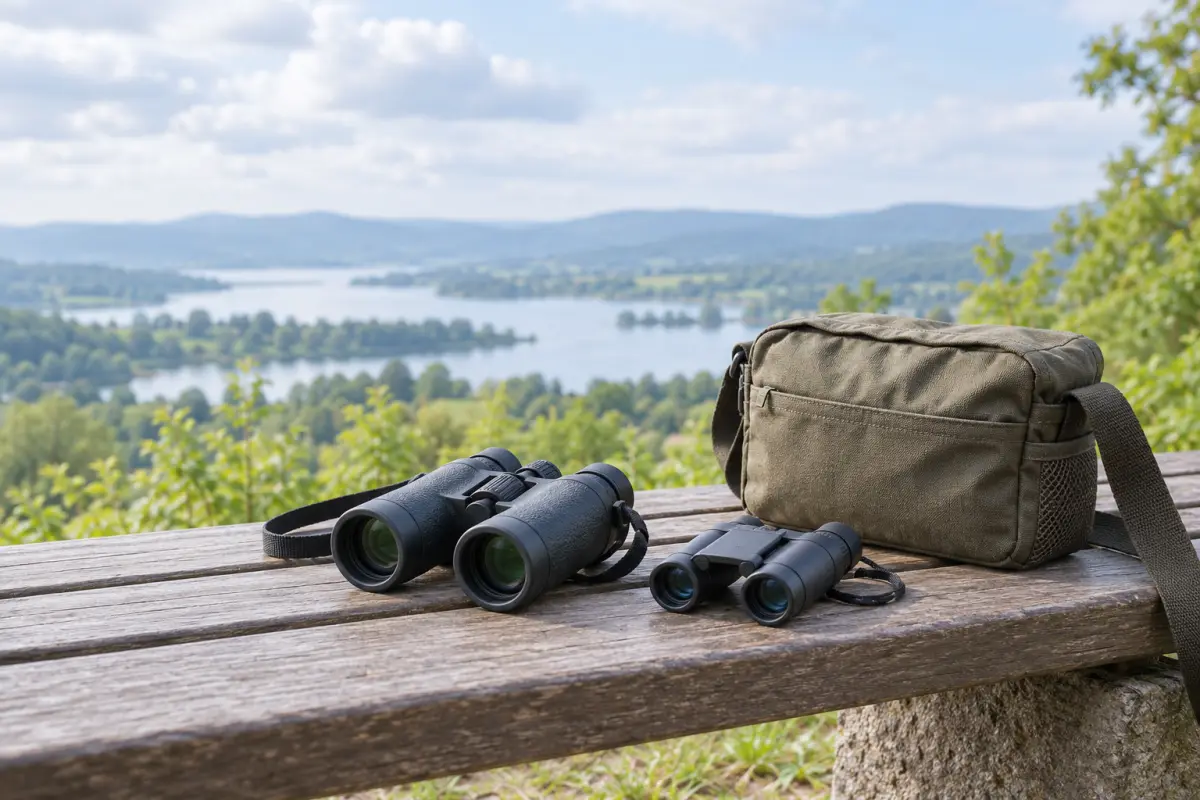 BinocularsCompact binoculars for birding: what you gain and lose
 ToolFind the binocular specs that fit how you bird
How we know
Seasonal patterns are guides, not promises of a sighting. Check current access rules and conditions before heading out. Give birds space, stay on open paths and avoid disturbing nests or roosts.